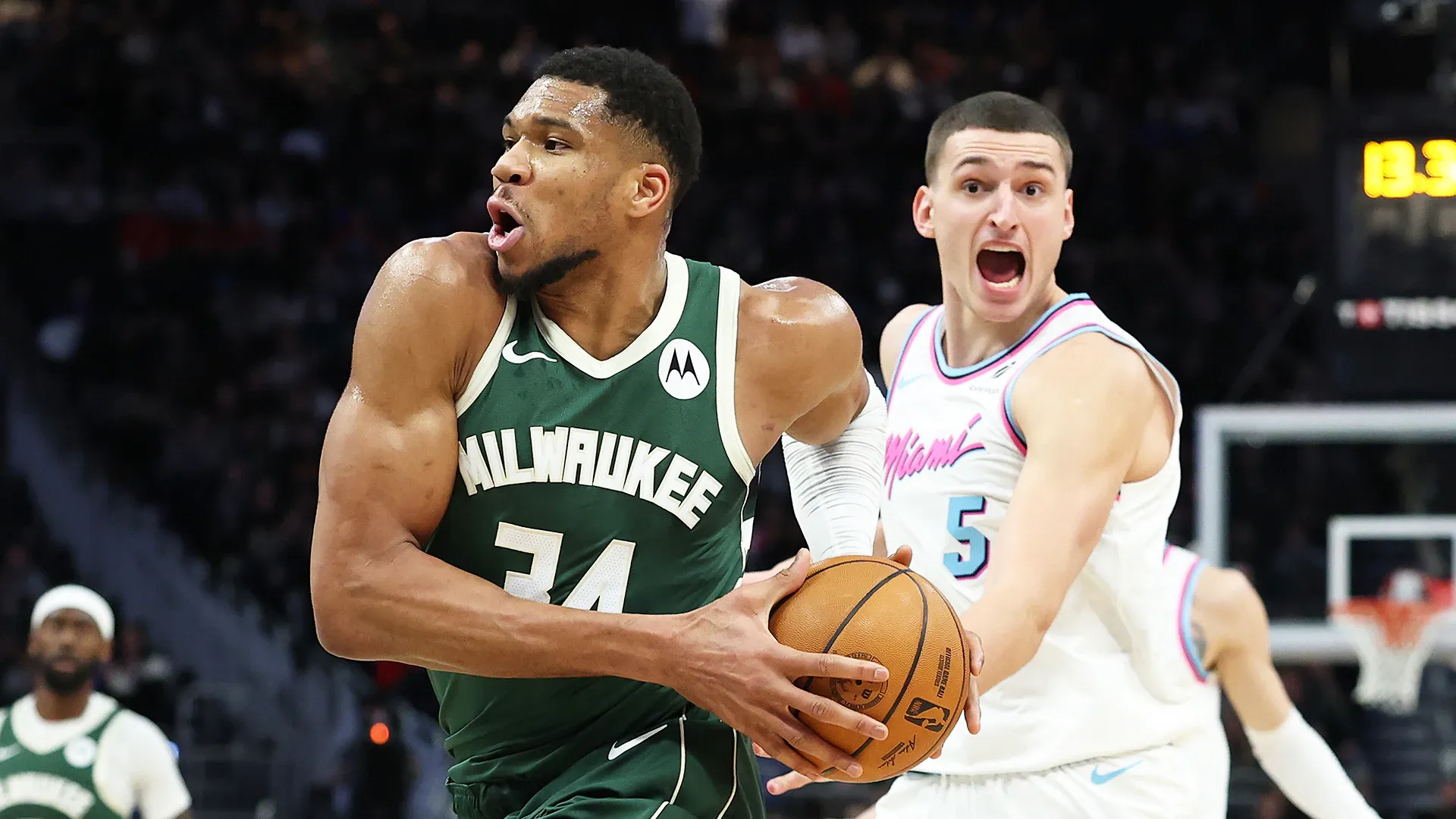
milwaukee bucks vs miami heat match player stats reveal a narrative that goes far beyond the simple numbers on a digital scoreboard. When these two Eastern Conference titans clash, the atmosphere in the arena shifts into something resembling a chess match played at a hundred miles per hour. This rivalry has become one of the most compelling fixtures in modern professional basketball because it pits two distinct organizational philosophies against one another. On one side, you have the sheer physical dominance and transition brilliance of the Milwaukee Bucks, led by a generational talent who defies traditional positional labels. On the other side, the Miami Heat represent a culture of discipline, defensive versatility, and a refusal to back down regardless of the seeding on the playoff bracket.
To understand the weight of these matchups, one must look at how the individual numbers translate into winning basketball. Every time the ball is tipped between these two squads, the box score starts to fill with data points that tell a story of grit and tactical execution. We see high-volume scoring, but we also see the subtle defensive rotations that make life difficult for even the best offensive players in the world. This specific matchup has defined the Eastern Conference landscape for several years, providing fans with some of the most memorable moments in recent postseason history. The statistics generated here are not just empty calories; they are the result of intense preparation and the clash of high-level basketball IQ.
Breaking Down the Milwaukee Bucks vs Miami Heat Match Player Stats
When we dive deep into the milwaukee bucks vs miami heat match player stats, the first name that inevitably commands attention is Giannis Antetokounmpo. His statistical profile in these games is often a barometer for the Bucks’ success. Against Miami, the “Greek Freak” faces a unique challenge because the Heat are notorious for their “wall” defense, a scheme designed specifically to prevent his downhill drives. Looking at his field goal attempts versus his free throw attempts reveals how much the Heat try to turn him into a jump shooter. In games where Giannis maintains a high shooting percentage while also tallying double-digit rebounds and five or more assists, Milwaukee usually finds itself in the winner’s circle.
However, the Miami Heat have their own statistical monster in Jimmy Butler. While his regular-season numbers might sometimes appear modest compared to the league’s scoring leaders, his performance metrics against Milwaukee often skyrocket. “Playoff Jimmy” is a statistical reality that the Bucks have had to contend with on multiple occasions. His efficiency from the mid-range and his ability to draw fouls are key components of the Heat’s offensive identity. When you analyze the box scores, pay close attention to Butler’s impact in the fourth quarter. His usage rate often spikes in the final six minutes, and his ability to generate points either through scoring or facilitating for shooters like Tyler Herro is a major factor in Miami’s ability to pull off upsets.
The backcourt battle adds another layer of complexity to the statistical output of these teams. For Milwaukee, the addition of Damian Lillard changed the mathematical equation of their offense. Lillard’s gravity on the perimeter forces the Heat defense to stretch thinner than they would like. His three-point percentage and “deep-range” attempts are critical metrics to watch. If Lillard is hitting from 30 feet out, it opens up the interior for Giannis to operate with more space. Conversely, the Heat rely on a committee approach in the backcourt, with players like Terry Rozier or Duncan Robinson providing the necessary spacing. The number of made threes by Miami’s role players often dictates whether they can keep pace with Milwaukee’s high-octane scoring potential.
Historical Context and Defensive Efficiency Metrics
The historical milwaukee bucks vs miami heat match player stats provide a fascinating look at how teams adapt over a multi-year period. If we look back at the 2020 bubble playoffs, the Heat dominated the statistical categories related to defensive rating and turnover percentage. They forced the Bucks into uncomfortable positions, resulting in a surprising series win for Miami. Fast forward to 2021, and the stats flipped entirely. Milwaukee’s defensive rebounds and points in the paint surged, allowing them to sweep the Heat on their way to a championship. This back-and-forth statistical tug-of-war shows that no lead is safe and no regular-season trend is set in stone when these two coaching staffs begin making adjustments.
Bam Adebayo’s defensive stats are perhaps the most underrated aspect of this rivalry. His ability to switch onto perimeter players while also acting as the primary rim protector against Giannis is a rare feat in the NBA. When looking at his player stats, don’t just look at points and rebounds. Look at the “defensive win shares” and the field goal percentage of the players he is guarding. Adebayo’s versatility allows Erik Spoelstra to be creative with his defensive schemes. If Bam can stay out of foul trouble and maintain his rebounding numbers, the Heat are much more likely to control the tempo of the game. His battle in the paint with Brook Lopez is also a key area of interest, especially regarding blocked shots and floor spacing.
Brook Lopez provides a unique statistical footprint for a center in this matchup. Known as one of the premier rim protectors in the league, his “blocks per game” and “contested shots” are vital for Milwaukee’s drop coverage scheme. On the offensive end, his ability to hit three-pointers as a seven-footer creates a dilemma for Miami’s defense. If Lopez is hitting his shots from the arc, it pulls Bam Adebayo away from the basket, leaving the rim vulnerable. This ripple effect shows how one player’s individual stats can influence the entire geometric layout of the court. The interaction between Lopez’s shooting and Giannis’s interior gravity is a cornerstone of the Bucks’ offensive strategy.
The role of the bench cannot be ignored when evaluating the milwaukee bucks vs miami heat match player stats. In many of their most competitive games, the difference-maker has been a reserve player who stepped up to provide a scoring punch. For the Bucks, Bobby Portis often brings a double-double threat off the bench, providing energy and rebounding that can swing the momentum. His field goal percentage and offensive rebounds are key indicators of the Bucks’ second-unit health. For the Heat, the bench often features high-IQ players who excel in specific roles, whether it’s defensive specialist Haywood Highsmith or a veteran presence like Kevin Love. Their ability to maintain the team’s defensive rating while the starters rest is often the unsung story of the game.
Shooting variance is another significant factor that shows up in the box scores. The Miami Heat are known for their “Heat Culture,” which emphasizes getting the most out of every player on the roster. This often results in undrafted players putting up shooting numbers that rival the league’s elite. When analyzing the match stats, look at the corner three-point percentage. Both teams prioritize this shot, but the Heat are particularly adept at creating these opportunities through ball movement and high-post entries. If Miami is shooting above 40% from the corners, the Bucks’ defensive scheme is usually under immense pressure. Milwaukee, on the other hand, relies on a high volume of threes to complement Giannis’s inside game, making their overall effective field goal percentage a critical stat to track.
Turnovers and points off turnovers often decide the outcome of these gritty encounters. The Heat pride themselves on a “disruptive” defense that looks to create havoc in the passing lanes. If the Bucks’ turnover count climbs above 15 in a game, it usually means the Heat are finding success in their transition game. Conversely, Milwaukee uses its length to deter shots and initiate fast breaks. The “points in transition” category is a telling statistic. When Milwaukee can run, they are almost impossible to stop. If Miami can force the game into a half-court grind, the statistical advantage often shifts toward their tactical execution. This battle for the “pace” of the game is reflected in the total number of possessions recorded in the final box score.
Evaluating the impact of coaching through player stats is a nuanced task. Erik Spoelstra and the Bucks’ coaching staff are constantly adjusting their rotations and defensive matchups. You can see this in the “player minutes” and “plus-minus” ratings. A player might not have a high scoring total, but their plus-minus might be the highest on the team because of their defensive positioning or the way they facilitate the offense. These “hidden” stats are what basketball aficionados look for when trying to predict the outcome of a series. The tactical decisions, such as when to double-team Giannis or how to hedge on a Lillard screen, are eventually captured in the shooting percentages of the opposing stars.
In the modern NBA, advanced analytics have become a staple for understanding player performance. Metrics like True Shooting Percentage, Player Efficiency Rating (PER), and Usage Rate provide a more comprehensive view of how a player contributes to their team’s success. In the context of the milwaukee bucks vs miami heat match player stats, these advanced metrics often highlight the efficiency of players like Khris Middleton. Middleton has a history of being a “Heat killer,” often raising his scoring average and shooting efficiency significantly when playing against Miami. His ability to hit tough, contested shots over smaller defenders is a statistical anomaly that the Heat have struggled to solve over the years.
The physical toll of these games also manifests in the rebounding statistics. Rebounding is often described as a measure of effort and desire, and in a Bucks-Heat game, every board is contested with playoff-level intensity. Milwaukee’s size advantage with Giannis, Lopez, and Portis usually gives them the edge on the glass. However, Miami’s collective rebounding, where guards and wings crash the boards, often mitigates this disadvantage. The “second-chance points” stat is a direct result of this battle. If Miami can limit Milwaukee’s second-chance opportunities, they significantly increase their chances of keeping the score close. This requires disciplined boxing out and a high level of physical engagement from every player on the floor.
Free throw attempts and percentages are frequently the deciding factor in close games between these two rivals. Giannis Antetokounmpo’s performance at the charity stripe is a constant point of discussion. When he is knocking down his free throws at a 75% clip or higher, it makes him virtually unguardable. On the other side, Jimmy Butler is a master at drawing contact and earning trips to the line. His ability to get the opposing team into the penalty early in the quarter is a tactical win for Miami. The total number of free throw attempts for each team often indicates which squad was the more aggressive “attacker” throughout the game. In a high-stakes matchup, a single missed free throw can be the difference between a win and a loss.
Looking ahead, the evolution of these rosters ensures that the milwaukee bucks vs miami heat match player stats will remain a focal point for NBA analysts. As younger players like Jaime Jaquez Jr. for the Heat or the Bucks’ recent acquisitions begin to play larger roles, the statistical landscape will continue to shift. However, the core identity of these teams—Milwaukee’s explosive power and Miami’s relentless grit—will likely remain the same. The data generated by these games serves as a testament to the high level of competition in the Eastern Conference. Every steal, every block, and every three-pointer is a chapter in an ongoing story of two franchises that refuse to yield an inch of ground to the other.
As we examine the box scores from their most recent meetings, we see a trend of high-intensity basketball that favors the disciplined. The “points off turnovers” and “fast break points” categories continue to be the primary battlegrounds. While the stars like Giannis and Butler will always grab the headlines with their gaudy stat lines, the peripheral numbers of the supporting cast are what often tip the scales. A timely block by Brook Lopez or a crucial steal by Caleb Martin can change the entire trajectory of a game, even if it only appears as a single digit in a column of data. This complexity is what makes following the stats of this specific matchup so rewarding for fans of the game.
The psychological aspect of the game also seeps into the statistics. We often see “shooting slumps” or “hot streaks” that are influenced by the defensive pressure applied by the opponent. Miami’s ability to switch defenses—moving from a man-to-man to a zone—can momentarily confuse the Bucks’ offense, leading to a dip in their shooting percentage over a specific stretch of minutes. Conversely, Milwaukee’s length can lead to a high number of “deflected passes,” a stat that doesn’t always show up in the primary box score but is a key indicator of defensive activity. These fluctuations are part of the rhythm of a Bucks-Heat game, making every possession a vital piece of the overall statistical puzzle.
For those looking to gain a deeper understanding of professional basketball, studying the milwaukee bucks vs miami heat match player stats is an excellent exercise in player evaluation and strategy analysis. It’s not just about who scored the most points; it’s about how those points were earned and what the opposition did to try and prevent them. The interplay between individual talent and team-oriented systems is perfectly encapsulated in this rivalry. As both teams continue to pursue championships, their statistical output will remain a benchmark for excellence in the league. Whether it’s a regular-season game in January or a Game 7 in May, the numbers will tell the story of two teams that embody the spirit of competitive sports.
Ultimately, the stats are a reflection of the preparation that happens behind the scenes. The film sessions, the practice drills, and the scouting reports all culminate in the data points we see on the screen. When we see a player like Bam Adebayo rack up high assist totals, it’s a result of the Heat’s offensive system designed to leverage his passing ability from the elbow. When we see Giannis Antetokounmpo finish a game with multiple blocks and steals, it’s a testament to his defensive instincts and motor. These stats are the tangible evidence of the hard work and dedication that these world-class athletes bring to the court every single night they face off.
The journey through the numbers of the Milwaukee Bucks and the Miami Heat is one of constant discovery. Each game provides new insights into player development and coaching ingenuity. As the NBA continues to evolve with a greater emphasis on three-point shooting and positional fluidity, these two teams remain at the forefront of that evolution. Their matchups are a showcase of the best the league has to offer, and the player stats are the definitive record of their achievements. By paying attention to the details within the box score, fans can appreciate the true artistry of the game and the incredible skill required to compete at this level.