
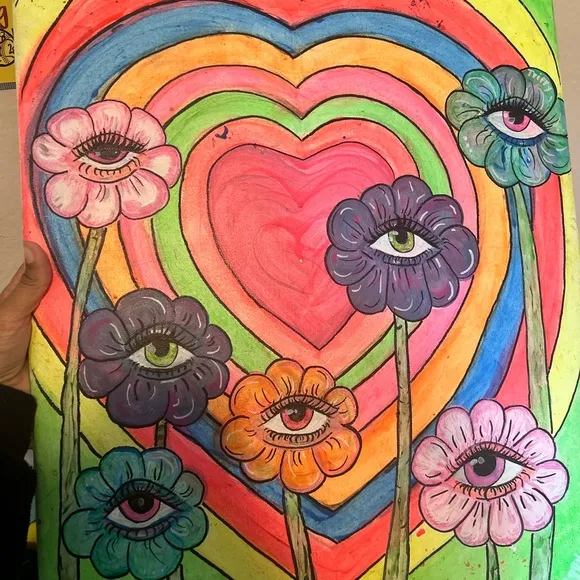
Glow-in-the-Dark Hand Art transforms the simplest movements of your fingers into a mesmerizing light show that captures the imagination of everyone in the room. Imagine walking into a dimly lit music festival or a midnight gallery opening where every gesture you make leaves a trail of luminescent beauty. This medium isn’t just about paint; it is about reclaiming the night through artistic expression that only reveals its true self when the sun goes down. For many, the first time they see their hands glowing with intricate neon patterns, it feels like stepping into a sci-fi film or a vivid dream. This unique form of body decoration has seen a massive surge in popularity because it offers a high-impact, temporary way to stand out in crowds where traditional accessories might go unnoticed.
The fascination with things that glow is deeply rooted in our psychology, often reminding us of childhood wonder or the bioluminescent mysteries of the deep ocean. When we apply these vibrant pigments to our hands, we are highlighting the most communicative part of our bodies. Hands tell stories, they dance, and they connect us to others. By using luminescent materials, those stories become electric. Whether you are a professional body painter or a hobbyist looking to spice up a themed party, understanding the nuances of light-reactive pigments is essential for creating a look that is both safe and visually spectacular.
I remember my first encounter with this art form at a small underground neon party in the city. The artist used a fine brush to trace the skeletal structure of my hand using UV-reactive ink. Under the blacklights, my hand looked like a digital blueprint come to life. It wasn’t just the visual appeal that stuck with me; it was the way it encouraged people to interact. Every high-five became a burst of light, and every dance move felt amplified. That experiential element is why this trend continues to dominate festival culture and creative night-life events around the world.
Understanding the Materials for Glow-in-the-Dark Hand Art
To excel in this craft, you must first understand the significant difference between fluorescent (UV-reactive) and phosphorescent (true glow-in-the-dark) materials. Fluorescent paints are the most common choice for festivals and clubs because they react intensely to ultraviolet “blacklights.” These pigments are incredibly bright and come in a wide array of neon shades like electric lime, hot pink, and blazing orange. However, they stop glowing the moment the UV light source is removed. This makes them ideal for controlled environments where blacklights are a permanent fixture.
On the other hand, true phosphorescent pigments work by storing energy from a light source and then slowly releasing it in total darkness. These are the classic “glow” colors, usually appearing in a pale green or ghostly blue. While they don’t require a constant light source to shine, they do need to be “charged” under a bright lamp periodically. For Glow-in-the-Dark Hand Art that needs to last through a dark walk or a late-night bonfire, phosphorescent paints are the superior choice. Many high-end artists actually layer both types to create a multi-dimensional effect that reacts to different lighting conditions.
Expertise in this field also requires a deep knowledge of pigment quality. Professional-grade body paints are formulated to be opaque and smooth, whereas cheaper “craft” versions often appear streaky or transparent on the skin. When you are working on the hands, which have many folds and constant movement, the flexibility of the paint is paramount. You need a medium that won’t crack or flake off the moment you make a fist. Look for products that list glycerin or professional cosmetic binders as their primary ingredients, as these allow the paint to move with your skin rather than sitting like a rigid shell on top of it.
Design Principles for Glow-in-the-Dark Hand Art
When planning your design, you must consider how the hand moves and how the light will hit it from different angles. One of the most effective techniques is to focus on the skeletal or “cybernetic” look. By tracing the metacarpal bones and the phalanges of the fingers, you create a design that looks incredible when you move your hands in time with music. This anatomical approach is a favorite for Halloween or tech-themed parties. The key is to use a fine-tipped brush to ensure the lines are crisp, as glowing paint tends to “bloom” or look slightly blurrier in the dark than standard paint.
Henna-inspired patterns also translate beautifully into the luminescent world. Imagine traditional mandalas and intricate lace patterns, but instead of dark brown stains, they glow in brilliant turquoise or neon violet. This style is particularly effective because it covers a lot of surface area, ensuring that your hands are visible even from a distance. Because the hands are a smaller canvas, you should focus on the “negative space” as much as the paint itself. Leaving gaps between your glowing lines allows the design to breathe and prevents it from looking like a solid, glowing blob when viewed from afar.
Storytelling can also be woven into your glowing designs. I once saw an artist create a “constellation” map across a client’s palms. When the hands were brought together, they formed a complete star chart. This kind of interactive design is what makes Glow-in-the-Dark Hand Art so special. It transforms the body into a puzzle that only becomes clear through movement and connection. You can also experiment with “secret” designs that are invisible in daylight but reveal themselves only under UV light, adding an element of surprise to your creative presentation.
Safety and Skin Care Protocols
Trustworthiness in the world of body art begins with safety, especially when dealing with chemical pigments that glow. It is absolutely vital to use only cosmetic-grade paints that are FDA-approved for use on the skin. Many glow-in-the-dark products intended for posters or fabric contain zinc sulfide or copper-activated minerals that can cause severe allergic reactions or even chemical burns if applied to the epidermis. Always check the label for terms like “non-toxic,” “hypoallergenic,” and “cosmetic use.” If a product doesn’t explicitly state it is safe for the skin, do not use it.
Before committing to a full hand design, an experienced artist will always perform a patch test. Apply a small amount of the pigment to the inside of the wrist and wait at least thirty minutes to check for any redness, itching, or swelling. Since the skin on our hands is often tougher but also exposed to more irritants throughout the day, ensuring the paint is comfortable is key. Additionally, the hands are frequently in contact with our faces and eyes, so using water-based, smudge-resistant paints is a much safer bet than oil-based alternatives that might migrate or smear easily.
Removal is another area where expertise comes into play. You don’t want to spend your night glowing only to spend the next morning scrubbing your skin raw. Most high-quality water-based neon paints will come off easily with a gentle cleanser and warm water. However, some pigments can leave a slight “ghosting” or stain on the skin, particularly if you have dry hands. Applying a thin layer of fragrance-free lotion before you start painting can act as a barrier, making the removal process much smoother. For stubborn phosphorescent paints, an oil-based makeup remover or even simple coconut oil will dissolve the pigments without damaging the delicate skin of your hands.
The Festival and Party Atmosphere
There is a specific energy that comes with wearing Glow-in-the-Dark Hand Art at a large-scale event. It acts as a universal icebreaker. In a loud, dark club where conversation is difficult, your glowing hands become a visual language. I remember attending a major electronic music festival where a group of us had our hands painted in matching geometric patterns. Even in a crowd of thousands, we could find each other by simply raising our hands. It provided a sense of community and safety that I hadn’t expected from a simple fashion choice.
For event organizers, hiring a dedicated neon artist can be the highlight of the night. Providing a “glow station” where guests can have their hands decorated adds an interactive element that keeps people engaged. It also makes for incredible social media content, as glowing art is famously “Instagrammable.” However, as a host, you must ensure the lighting is appropriate. Without blacklights, your fluorescent paint won’t show up, and without periods of total darkness, your phosphorescent designs won’t get their time to shine. Balancing the lighting is an art form in itself, requiring a mix of UV floodlights and intentional dark zones.
Psychologically, the act of being painted is also quite soothing. It forces the participant to sit still and be present for a few minutes while the artist works. This moment of stillness in the middle of a chaotic party can be a welcome break. When the paint finally dries and the blacklights turn on, the “reveal” creates a dopamine hit that sets the tone for the rest of the evening. It is a transformation that feels both physical and emotional, turning a regular guest into a living piece of the event’s decor.
Capturing the Glow: Photography Tips
One of the biggest challenges with this art form is documenting it correctly. Standard smartphone cameras often struggle to capture luminescence in low light, resulting in grainy, blurry images that don’t do the art justice. To truly showcase your glowing hand art, you need to understand the basics of long-exposure photography. Using a tripod is essential because even the slightest vibration will blur the glowing lines. If you are using a smartphone, look for a “Night Mode” or an app that allows you to manually control the shutter speed.
Lighting the photo is a delicate balance. You want enough blacklight to make the colors pop, but not so much that it washes out the details of the hand itself. Placing the UV light source to the side rather than directly in front of the hand can create shadows that give the design depth and dimension. If you are using phosphorescent paint, try a “light painting” technique where you keep the shutter open for several seconds and use a small flashlight to “charge” the paint right before the shot. The results can be ethereal, showing the glow against a completely black background.
Experience has shown that the best photos often come from capturing movement. If you move your hands slowly during a long-exposure shot, the glowing paint will create “light trails” that look like ribbons of fire in the air. This technique is perfect for capturing the kinetic energy of a dance floor. For professional portfolios, it is also helpful to take a “before and after” shot—one in regular light and one in the dark—to show the transformation. This demonstrates the artist’s ability to create a design that is aesthetically pleasing in both environments.
Step-by-Step Guide to a Simple Neon Mandala
If you are new to the world of Glow-in-the-Dark Hand Art, starting with a central mandala is a great way to practice your precision. Begin by thoroughly washing and drying your hands to remove any oils. Using a small dotting tool or the end of a thin brush, place a single dot of neon yellow in the center of the back of your hand. This will be your anchor point. Surround that dot with a circle of smaller neon green dots, ensuring they are evenly spaced. The symmetry is what makes a mandala look professional, so take your time with this initial step.
From the central circle, draw small, petal-like arcs using a vibrant neon pink or orange. At this stage, you don’t need a blacklight to see what you are doing, as neon paints are very bright in daylight. Continue adding layers of dots and lines, moving outward toward your knuckles and wrist. Once you reach the fingers, try adding thin, vertical lines that lead to a single dot at the base of each fingernail. This elongates the hand and makes the design feel cohesive. Let the paint dry completely—usually about five to ten minutes—before testing it under a UV light.
If you find that some lines look a bit faint, don’t be afraid to go back and add a second layer. This is particularly important for phosphorescent paints, which often need a bit of thickness to hold a strong charge. Once you are satisfied with the design, you can add a “pop” of highlight using a white UV-reactive paint. This will look like a bright, electric spark in the dark and will give your mandala a professional, high-contrast finish. The final result should look like a radiant sun or a blooming flower that pulses with light every time you move your wrist.
Professional Application Tools
While your fingers can be used for “splatter” effects, serious artists invest in a variety of brushes and sponges. Synthetic brushes are generally better for water-based body paints because they maintain their shape when wet and are easier to clean. A fine “liner” brush is essential for the skeletal and lace details we discussed earlier, while a small “filbert” brush is great for creating rounded flower petals. For large areas of glow, a high-density cosmetic sponge will provide a smooth, airbrushed finish that doesn’t show brush strokes.
Some advanced artists also use airbrush systems for their glowing hand art. This allows for incredibly smooth gradients and “ombre” effects that are difficult to achieve by hand. Imagine a hand that fades from a glowing deep blue at the wrist to a bright neon green at the fingertips. This level of sophistication is a hallmark of top-tier festival artists who work at major events like Burning Man or Tomorrowland. If you go this route, ensure your airbrush pigments are specifically labeled as skin-safe and clog-resistant, as the phosphors in some glow paints can be quite abrasive to the internal parts of an airbrush gun.
Maintaining your tools is also a sign of expertise. Glowing pigments can be stubborn, and if they dry inside the bristles of an expensive brush, they can ruin its flexibility. Always wash your brushes immediately after use with a dedicated brush soap or a gentle shampoo. Store them flat or hanging bristles-down to prevent water from weakening the glue in the ferrule. By taking care of your equipment, you ensure that your designs remain crisp and your application remains effortless, event after event.
Psychological Benefits of Artistic Expression
Beyond the visual spectacle, participating in this art form can have genuine mental health benefits. The process of painting or being painted is a form of “active meditation.” It requires focus, a steady hand, and a creative vision, all of which help to quiet the “monkey mind” and reduce stress. For the person being painted, the tactile sensation of the brush and the focused attention of the artist can be deeply grounding. It is a rare moment of human connection in an often-distracted world.
The “glow” itself can also act as a mood elevator. Light therapy is a well-documented treatment for various forms of depression, and while neon body paint isn’t a medical device, the bright, vibrant colors certainly provide a sensory boost. There is a sense of empowerment that comes from being the source of light in a dark room. It builds confidence and encourages a playful, adventurous spirit. When you wear Glow-in-the-Dark Hand Art, you are essentially saying that you are not afraid of the dark; in fact, you are the reason the dark is beautiful.
This form of art also encourages a sense of “impermanence,” which is a core tenet of many mindfulness practices. The art is beautiful, but it is temporary. It exists for one night, one dance, one memory, and then it is washed away. This reminds us to cherish the present moment and to find beauty in things that don’t last forever. It is a vibrant, neon-colored lesson in letting go and enjoying the “now.” Whether you are the artist or the canvas, the experience leaves a lasting impression on the soul long after the paint has disappeared from the skin.
Planning a Neon-Themed Workshop
If you are an experienced artist looking to share your passion, hosting a neon hand art workshop is a fantastic way to build a community. The key to a successful workshop is providing the right environment. You will need a space that can be made completely dark and several high-powered blacklight bars to ensure everyone can see their progress. Providing individual mirrors is also a great touch, as it allows participants to see their designs from the artist’s perspective.
Start the workshop with a brief safety demonstration, emphasizing the importance of skin-safe materials and patch testing. Then, move on to basic techniques like line control and dotting. Providing “practice sheets” (laminated templates of hands) allows students to gain confidence before they start painting their own skin. Encourage participants to experiment with different color combinations and to think about how their design will look when they move their hands. The goal isn’t perfection; it is about exploring the unique properties of light and pigment.
By the end of the session, the room will be filled with glowing, vibrant energy. Group photos under the blacklights are a must, providing everyone with a memento of their creative journey. This kind of collaborative environment fosters a sense of achievement and inspires others to continue exploring the world of luminescent art. It turns a solitary hobby into a shared experience, proving that light is best when it is shared with others. Through these workshops, you can pass on the technical skills and the safety knowledge that keep the art form thriving and respected.
Integration with Other Art Forms
Luminescent hand art doesn’t have to exist in a vacuum. It can be beautifully integrated with other forms of performance and visual art. Flow artists, such as fire dancers or poi spinners, often use UV paint to enhance their routines. When their hands glow in sync with their spinning props, the visual impact is doubled. Similarly, musicians and DJs can use glowing art to make their performances more theatrical. A DJ whose hands glow as they manipulate the turntables adds a layer of visual rhythm to the auditory experience.
In the world of theater and modern dance, designers use these pigments to highlight specific gestures and movements that might otherwise be lost in a large auditorium. By painting only the hands, a choreographer can draw the audience’s attention to the most expressive part of the dancer’s body. This creates a haunting, ethereal effect that can be used to represent spirits, magic, or futuristic technology. The possibilities are truly endless when you begin to think of the hand as a dynamic, light-emitting instrument of performance.
Even in the world of high fashion and photography, we are seeing a move toward “neon noir” aesthetics. Photographers use UV hand art to create edgy, avant-garde editorials that challenge our perceptions of beauty and light. By combining traditional fashion elements with the unpredictable glow of neon, they create images that are both timeless and futuristic. This cross-disciplinary approach ensures that Glow-in-the-Dark Hand Art remains a relevant and evolving part of the modern artistic landscape, constantly pushing the boundaries of what we consider “art.”
boys mehndi design simple
mehndi designs for boys hand
mehndi design instagram front hand