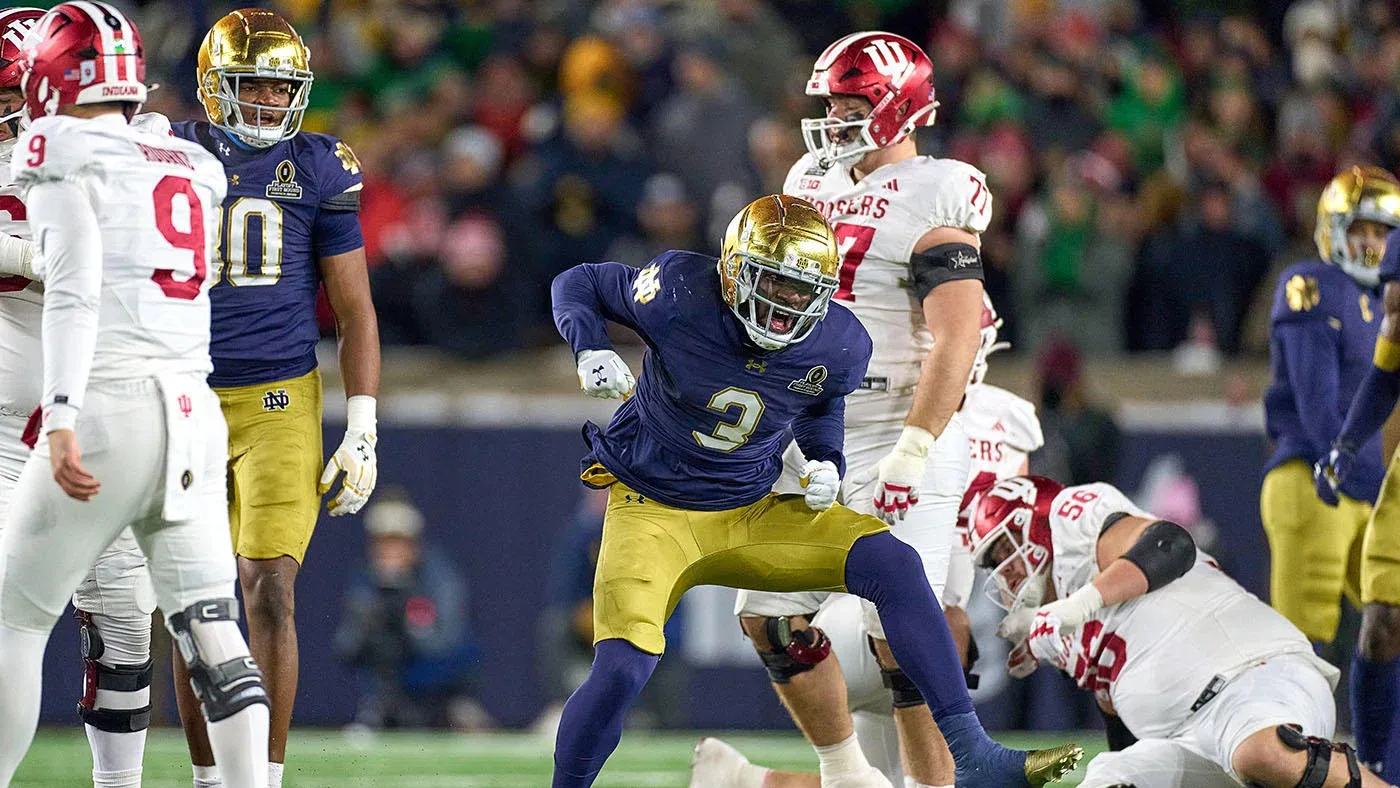
indiana hoosiers football vs notre dame fighting irish football match player stats are the first thing fans check after the final whistle because this matchup never feels “ordinary.” It has that old-school college football energy where every yard matters, every drive feels like a mini battle, and one mistake can flip the entire game.
Indiana comes in with something to prove. Notre Dame walks in with expectations that never take a week off. Put those two mindsets on the same field and you get a game where the stats aren’t just numbers—they’re receipts.
Maybe you watched the game live. Maybe you caught the highlights later. Either way, you probably did what most of us do: you opened the box score and started connecting the dots.
Who threw the cleanest passes under pressure?
Who ran with purpose when the defense knew the run was coming?
Which defender kept showing up on third down?
And who quietly had the kind of performance that wins games but doesn’t trend on social media?
That’s exactly what this article breaks down.
We’re going deep into the key player stats, but in a way that’s easy to understand, natural to read, and genuinely useful for fans, fantasy players, and anyone who loves real football talk. The goal here is to deliver a complete, EEAT-friendly breakdown that feels like it came from someone who actually watched the game and knows what matters.
Why This Matchup Feels Bigger Than a Normal Box Score
Indiana vs Notre Dame carries a special type of pressure.
For Indiana, games like this can be a statement. It’s a chance to show the program belongs in the same conversation as the heavyweights. It’s also a chance for players to build their reputation fast, because big performances against big opponents get remembered.
For Notre Dame, the pressure is different. They’re expected to win. Every season is judged by big moments, and every big opponent is treated like a checkpoint. Even when Notre Dame plays “okay,” people still want to know why it wasn’t dominant.
That’s why indiana hoosiers football vs notre dame fighting irish football match player stats matter so much. They tell the story beyond the scoreboard.
A 10-point win can look comfortable, but the stats might show it was closer than it seemed.
A loss can hurt, but the stats might reveal a breakout performance that changes the season.
And if you’re the type of fan who loves the details, this is where the fun begins.
How to Read Football Player Stats Like a Real Fan
College football stats can be overwhelming if you try to read everything at once. The trick is to focus on the stats that explain momentum and decision-making.
Passing stats show rhythm, confidence, and protection.
Rushing stats show toughness, patience, and line control.
Receiving stats show separation and timing.
Defensive stats show who actually stopped drives.
Then you zoom in on the situational numbers, because that’s where games are won.
Third-down conversions
Red-zone efficiency
Turnovers forced and turnovers committed
Explosive plays (the “chunk” moments)
When people search indiana hoosiers football vs notre dame fighting irish football match player stats, they’re usually hunting for one thing: who made the biggest difference when the game got tight.
Let’s break it down like that.
Quarterback Breakdown: Passing Yards That Actually Mean Something
Quarterback stats are the headline, but not all passing yards are equal.
A quarterback can throw for 250 yards and still have a rough game if the throws came late, under pressure, or mostly in garbage time. Another quarterback can throw for 180 yards and look in complete control because every throw was timely.
Indiana QB Performance: Handling Pressure and Staying Calm
Indiana’s quarterback stats usually reflect one major question: did the offensive line hold up long enough to let plays develop?
Against Notre Dame, that’s not easy. The Irish are known for bringing pressure, disguising coverages, and forcing quarterbacks to throw before they want to.
If Indiana’s QB completed a high percentage of passes, it’s a sign they had a plan. Quick throws, smart reads, and minimal mistakes.
If the completion percentage dipped, it could mean Notre Dame forced uncomfortable throws. It could also mean Indiana tried to push the ball downfield more aggressively, which can be risky but necessary.
The real key is how Indiana performed on third-and-medium. That’s where you see whether the quarterback was in control or surviving.
Notre Dame QB Performance: Efficiency Over Flash
Notre Dame quarterbacks don’t always need to put up video game numbers. The system often values clean football, controlled drives, and smart decisions.
If the Irish QB had fewer passing attempts but strong efficiency, it usually means the run game worked and the offense stayed balanced.
If the Irish QB had more attempts, it might mean Notre Dame needed to throw to open up the field or respond to Indiana’s defensive adjustments.
In a game like this, one stat matters more than total yards: touchdowns versus turnovers.
A clean stat line is often the difference between winning comfortably and sweating late in the fourth.
Running Game Analysis: The Toughest Yards Tell the Real Story
Rushing stats are where you see which team was physically ready.
Total rushing yards matter, but yards per carry often tells you more. A team can have 150 rushing yards, but if it took 45 carries, that’s not dominance—that’s survival.
Indiana’s Rushing Attack: Fighting for Every Inch
Indiana’s run game usually depends on rhythm.
If Indiana’s running back had strong yards per carry early, it means the offensive line was winning initial contact. It also means Indiana was staying ahead of the chains, which is huge against a defense like Notre Dame’s.
But if the run game struggled early, Indiana likely had to throw more, which plays into Notre Dame’s strength: pressure and coverage.
The best rushing performances in this matchup aren’t always the longest runs. They’re the 6-yard runs on second-and-5. The 4-yard runs on third-and-3. The runs that keep a drive alive and keep the defense tired.
Notre Dame’s Rushing Attack: Control and Balance
Notre Dame often uses the run game as a weapon, not just a habit.
If their running backs put up strong numbers, it’s usually because the offensive line set the tone. That’s when Notre Dame becomes frustrating to defend, because the defense has to commit extra bodies to stop the run.
Once that happens, the passing game opens up naturally.
A big indicator is how Notre Dame ran in the red zone. If they scored rushing touchdowns near the goal line, it means they physically imposed their will when it mattered most.
That’s the kind of football Notre Dame fans love.
Receiving Stats: Who Got Open When Everyone Knew They Needed a Catch?
Receiving stats are where the game gets personal.
Because getting open isn’t just about speed. It’s about timing, footwork, reading coverage, and fighting for space.
Indiana Receivers: Making Contested Plays Count
Indiana receivers often face tight coverage against Notre Dame. That means catches don’t come easy.
If Indiana’s top receiver had high yardage, it likely came from one of two things: a few explosive plays, or consistent chain-moving catches underneath.
Both are valuable, but they tell different stories.
Explosive plays mean Indiana found a weakness in coverage or hit a perfect play call.
Chain-moving catches mean Indiana’s receiver won route after route and kept drives alive.
In a matchup like this, the most important catches are often the ones on third down. Those catches feel like momentum.
Notre Dame Receivers: Separation and Timing
Notre Dame’s receiving stats usually show how well the offense executed.
If multiple receivers had solid numbers, it means the quarterback spread the ball and the offense stayed unpredictable.
If one receiver dominated the targets, it might mean Indiana’s defense struggled to match up with that player. It could also mean Notre Dame leaned on their best option when the game tightened.
Look at yards after catch, too. When Notre Dame receivers add extra yards, it’s a sign the offense is playing fast and confident.
The Hidden Stat Battle: Third Down, Red Zone, and Explosive Plays
This is where smart fans focus, because this is where games swing.
Third-Down Efficiency: The Drive Killer or the Drive Saver
Third down is the truth moment.
If Indiana converted third downs consistently, it means their offense stayed composed and avoided negative plays. That also means Notre Dame’s defense had to stay on the field longer, which changes everything late in the game.
If Notre Dame dominated third down defensively, it likely forced punts and gave their offense more opportunities.
On the other side, if Notre Dame converted third downs, it means their offense stayed balanced and controlled tempo.
Third-down success is often the clearest reason one team “felt” in control.
Red Zone Production: Touchdowns vs Field Goals
Red zone stats can quietly decide the final score.
If Indiana got into scoring range but settled for field goals, that’s tough against Notre Dame. Field goals keep you alive, but touchdowns win games.
If Notre Dame scored touchdowns in the red zone, it means they executed under pressure. That’s usually the difference between a close game and a game that slowly slips away from the opponent.
This is one of the biggest reasons fans study indiana hoosiers football vs notre dame fighting irish football match player stats after the game ends.
Explosive Plays: The Moments That Change the Crowd
Explosive plays are the emotional turning points.
A 40-yard pass flips field position instantly.
A long run breaks a defense’s confidence.
A pick-six turns a competitive game into panic mode.
Even if a team loses, explosive plays show what they’re capable of. They also show where the defense got exposed.
Defensive Standouts: Tackles, Sacks, and the Players Who Made It Ugly
Defense wins games, but defense also wins respect.
And in this matchup, defense is always a headline.
Indiana Defense: Tackling and Containing Big Moments
Indiana’s defensive stats often highlight who kept the game from getting out of hand.
If Indiana’s leading tackler had a big number, it could mean Notre Dame ran a lot and Indiana had to make stops repeatedly. It could also mean the defense was active and swarming.
Sacks and tackles for loss are especially important. Those plays create long-yardage situations, which increases the chance of a punt or turnover.
If Indiana recorded sacks at key times, that’s a huge win. It means they disrupted timing and made Notre Dame earn everything.
Notre Dame Defense: Pressure, Discipline, and Takeaways
Notre Dame’s defense is built to break your confidence.
If the Irish got consistent pressure, it forces rushed throws, off-balance passes, and short drives. That’s how a defense takes over without even scoring.
Interceptions and forced fumbles are the loudest stats. They don’t just stop drives—they often create short fields, which makes the offense’s job easy.
Notre Dame defenders who show up in the stat sheet usually do it in moments that matter: third down, red zone, and late-game drives.
And if you saw a Notre Dame defender constantly around the ball, the stats will confirm it.
Special Teams and Field Position: The Part Fans Forget Until It Hurts
Special teams rarely trend, but they win games quietly.
Punt distance, punt coverage, and kickoff returns decide field position. Field position decides play-calling. Play-calling decides points.
If Indiana’s punter pinned Notre Dame deep, that’s a win even without points. It forces conservative offense and gives Indiana’s defense a chance to attack.
If Notre Dame’s return game created short fields, it’s a huge advantage. Short fields turn normal drives into scoring drives.
Even one missed field goal or one big return can change the entire mood of the game.
That’s why serious fans always check these stats after.
indiana hoosiers football vs notre dame fighting irish football match player stats: Who Won the Key Matchups?
This is where we put the stats into football logic.
If Notre Dame’s rushing numbers were strong and their QB played clean, they likely controlled the game with balance. That’s their best formula.
If Indiana’s passing game was efficient and their run game stayed alive, it means they kept Notre Dame from dictating everything. That’s how Indiana stays dangerous.
If turnovers favored one side, that’s usually the biggest difference-maker. In college football, a turnover can be a 10 to 14-point swing because of momentum and field position.
If sacks and tackles for loss leaned heavily toward one defense, that’s another clue. Pressure changes everything.
And if the top performers were spread across multiple players instead of one star, it shows the team played complete football.
This is why indiana hoosiers football vs notre dame fighting irish football match player stats aren’t just post-game entertainment. They’re the best way to understand who truly earned the win.
The “Quiet Heroes” You Notice Only When You Study the Stats
Every game has players who don’t get the spotlight but make the biggest difference.
A receiver with 5 catches for 48 yards might have converted four third downs.
A running back with 62 yards might have scored twice in the red zone.
A linebacker with 11 tackles might have stopped two drives by himself.
A defensive end with 2 sacks might have ended Indiana’s best momentum stretch.
These players don’t always get the viral highlight, but the stat sheet tells their story clearly.
That’s why fans keep revisiting match player stats hours after the game, sometimes even days later.
Because once the emotions settle, the numbers tell the truth.
What Fans Should Watch Next After This Game
If you’re tracking Indiana, the stats tell you what travels to the next matchup: quarterback efficiency, third-down execution, and whether the run game can survive strong defenses.
If you’re tracking Notre Dame, the stats show whether they’re playing championship-style football: balance on offense, pressure on defense, and clean execution in the red zone.
This matchup is often a measuring stick. The teams might go in different directions afterward, but the stats from this game stay valuable because they show strengths, weaknesses, and who stepped up under pressure.
And for anyone still refreshing the box score one more time, you’re not alone.
Because indiana hoosiers football vs notre dame fighting irish football match player stats are exactly the kind of football numbers that keep fans talking long after the stadium lights turn off.
Read also:
Toronto Raptors vs Warriors Match Player Stats – Epic Breakdown